

Multi-store
One organization.
Every cold store.
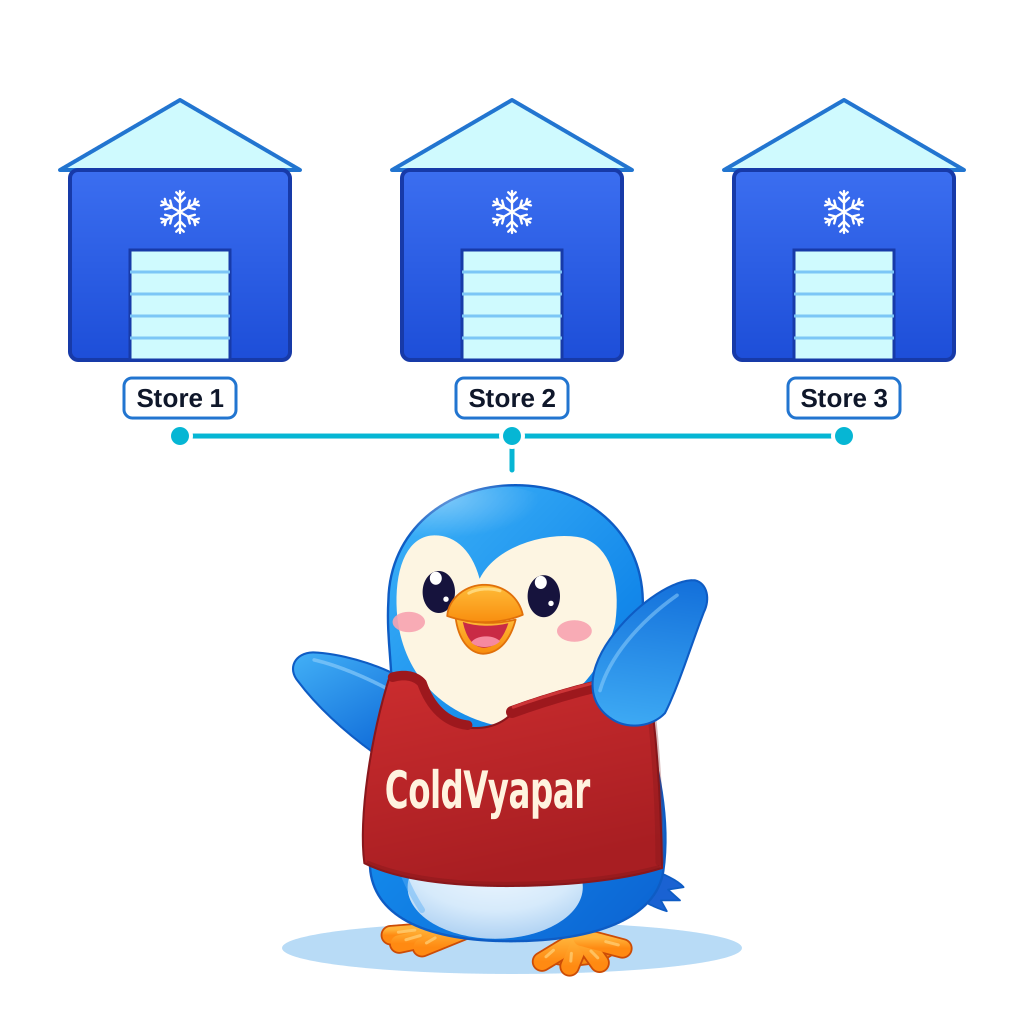
Shared customers, products, UOMs, and policies. Separate chambers, lots, documents, and bills. One fair ledger across every store you run.
Organization
Customers · products · UOMs · policies
Cold store A
Reconciled- Chambers
- 4
- Lots
- 612
- Full
- 71%
Cold store B
Reconciled- Chambers
- 3
- Lots
- 428
- Full
- 64%
Cold store C
Reconciled- Chambers
- 2
- Lots
- 244
- Full
- 82%
Illustrative organization · each store keeps its own stock and bills
Shared and separate
Set it up once. Keep each store honest.
Masters live with the organization, so a customer is the same customer at every store. Stock and bills stay with the store that holds the goods.
Shared across the organization
- Users and their roles
- Customers
- Products and UOMs
- Access policy and calculation policy
Kept per cold store
- Business profile — letterhead, GSTIN, document prefix
- Chambers, floors, and capacity
- Lots, lot locations, and bardana stock
- Inward, outward, shifting, transfer, and adjustment documents
- Bills and approval requests
Who sees what
Each person, the right stores.
A user can be assigned to one cold store, several, or all of them — with a role at each.
- Counter operator
- Assigned to one cold store. Records inward and outward there.
- Supervisor
- Assigned to one or several stores. Approves the activities your policy gates.
- Store manager
- Watches occupancy, stock, and bills for the stores they run.
- Owner
- Sees every store. Sets the rules and can step in on any approval.
Between stores
A truck between stores
is an outward and an inward.
Each cold store runs on its own. When goods move by truck from one store to another, the origin records an outward and the destination records an inward — the same documents your customers already know.
Talk to the teamCold store A
DC 212 · 300 bags
Outward · stock deducted
Cold store B
GRN 88 · 300 bags
Inward · new lot placed